
The Science · Chapter 4 of 5
Perception
Your skin changes the formula, and smell reaches the brain’s emotional centers by an unusually short route. Here is what the evidence actually supports.
About 5 minutes of reading
Your Skin Changes the Formula
Perfume is not a static object. It reacts with your skin chemistry in real time. The same formula can smell different on different people — and on the same person from one day or season to the next.
Skin pH
Healthy skin is slightly acidic, and its chemistry varies from person to person. Perfumers commonly observe that dry skin lets a fragrance fade faster and oilier skin holds it longer; how much pH itself changes a scent is less clear.
Microbiome
Your skin microbiome produces its own volatile organic compounds that interact with fragrance molecules. It is one proposed reason two people wearing the same perfume smell different: their bacteria may transform some of its molecules differently.
Diet & Hormones
What you eat and your hormones can change the volatile compounds your skin gives off, so a fragrance may wear differently over a week or a year. Claims that particular hormones favor particular notes go beyond the evidence.
Never buy a fragrance based on smelling it on someone else, a paper strip, or directly from the bottle. Test it on your own skin and give it time before you judge: it changes over its opening minutes and hours.
After a few smells of the same material your nose adapts and you briefly stop noticing it. This is why perfumers step into fresh air between samples. Coffee beans are often offered for the purpose, but a small 2011 study found sniffing them worked no better than sniffing plain air (Grosofsky, Haupert and Versteeg, Perceptual and Motor Skills 112: 536–538). The same adaptation is why you soon stop smelling a fragrance you are wearing: to judge how it carries, ask someone near you.
1 labeled · 3 unsourced
Evidence for this section: 1 labeled · 3 unsourced
Scent, Memory & Emotion
The Proust effect — the involuntary, vivid memory a scent can bring back — is a well-known idea in the science of smell, and one that researchers have tested in the laboratory.
The Proust Effect
In Swann’s Way (1913), Proust described how the smell of a madeleine dipped in lime-blossom tea triggered a complete, involuntary return to his childhood. The usual explanation: smell reaches the brain’s memory and emotion regions by an unusually short route, and studies have found odor-cued memories often more emotional than memories cued by words or pictures.
Scent as Identity Marker
Body odor is shaped in part by genes of the immune system (the MHC), and some studies suggest people prefer the scent of partners with different MHC profiles; the evidence is mixed. Perfume changes this signal more than it hides it.
A 2014 study (Bushdid and colleagues) estimated that people can tell apart more than a trillion odor mixtures; a later critique argued the math overstates it, so treat the figure as vivid rather than settled. Either way, the nose encodes smells combinatorially, with far more channels than color vision — we are better at smelling than we thought.
The site gives no medical advice. Speak to a doctor about any change in your sense of smell.
3 sourced · 2 unsourced
Evidence for this section: 3 sourced · 2 unsourced
Sources cited here include: Herz (2016). The Role of Odor-Evoked Memory in Psychological and Physiological Health; Gerkin and Castro (2015). The number of olfactory stimuli that humans can discriminate is still unknown
Fragrance & the Mind
Smell reaches the brain’s emotional centers by an unusually short route — which makes it powerful — and heavily over-claimed in marketing. Here is what the evidence actually supports.
The Emotional Nose
Smell reaches the brain’s emotional centers by an unusually short route. Signals from the olfactory bulb travel directly to the amygdala, and reach the hippocampus by way of the entorhinal cortex — structures governing emotion and memory — largely bypassing the thalamus, the relay station that filters sight, sound, and touch. This anatomical shortcut is one likely reason an odor can summon a feeling, or a vivid memory, before you can name what you are smelling.
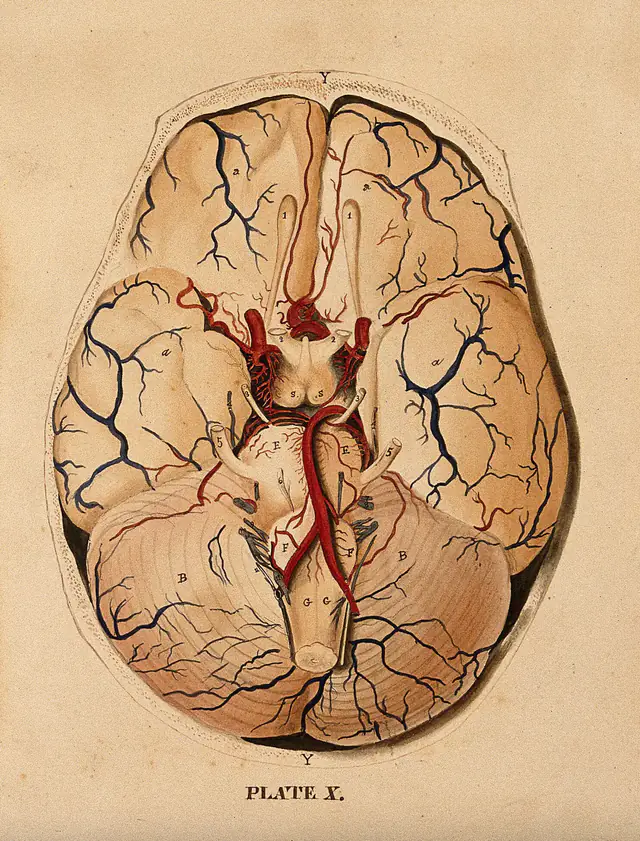
The consequence is not that scent controls mood, but that its emotional signal arrives fast, unbidden, and tightly bound to context. A smell first encountered during a formative moment tends to carry that moment’s feeling for life — a phenomenon often called the “Proust effect.” It also means scent responses are deeply learned and personal: the same note can soothe one person and unsettle another, depending on what it was paired with the first time.
Health claims about scent: what the evidence says
Honesty here means saying what this site does and does not do: it describes what materials are, where they come from and how they smell. It makes no claim that a scent calms, lifts the mood or treats anything, and it reports no such effect.
Most sweeping claims — that specific oils detoxify the body, balance hormones, or treat disease — are not supported. The harder task is distinguishing a true pharmacological effect from three ordinary mechanisms that mimic one: expectation (you were told it would relax you), placebo, and simple pleasantness (liking a smell can color what people report about it). A well-designed study controls for all three; most marketing controls for none.
The Pheromone Debate
Despite decades of confident advertising, no human pheromone has ever been definitively identified. In insects and many mammals, pheromones are real and potent chemical signals; extending that to people has proved far harder. The leading candidates — androstadienone, from male sweat, and estratetraenol — have produced mixed and generally weak results, and several headline findings have failed to replicate.
Part of the problem is anatomical: the vomeronasal organ, which detects pheromones in other species, appears vestigial in adult humans, lacking the working neural connections it would need to function. This does not prove humans have no chemical communication — body odor may play a part in attraction, and some studies suggest it signals immune-related compatibility, though the evidence is mixed — but it does mean products sold as “pheromone” colognes rest on claims the science has not earned.
Scent as Brand: Ambient Scenting
Retailers and hotels increasingly diffuse signature scents to shape how a space feels and how long people linger — an ambient, brand-building use of smell. Because smell binds so readily to memory, a consistent house scent can become a durable brand cue, recognized before a logo is seen.
Whatever their size, the effects raise a fair ethical question: influence the customer cannot see is harder to resist or consent to. The reasonable line is transparency and restraint — a pleasant, well-judged scent that improves an environment is defensible; one engineered to override judgment, or piped in undisclosed at cloying strength, is not. As with the rest of this field, the useful stance is to weigh the evidence.
1 sourced · 1 labeled
Evidence for this section: 1 sourced · 1 labeled
Sources cited here include: Herz (2016). The Role of Odor-Evoked Memory in Psychological and Physiological Health