The recordsIn your roomThe journey
Station 11 of 13 · In your room · the journey
From bottle to molecule
Four steps in one drop of rose: the bottle, the mist it sprays, the rose the scent came from, and one of the rose’s molecules. Each step turns here, engraved, and can stand in your room with a phone.
“Turn it here” draws the models on the page; nothing is fetched before you press it, and the steps work as stills without it. On an iPhone or iPad, “View in your room” opens Apple’s AR Quick Look; on an Android phone, Google’s Scene Viewer (not yet tested on a device). Nothing is stored or sent.
modeled
The bottle and the mist are in-house models: a proof flacon, not a product, at a nominal size; the mist is drawn, not simulated, and its droplets are drawn far larger than real ones. The rose is a 3D model of a garden rose by Lassi Kaukonen (CC BY 4.0), not a Damask rose. The molecule is PubChem’s computed 3D conformer: a model. What the steps say about the rose and the molecule is read from their records, which carry the sources.
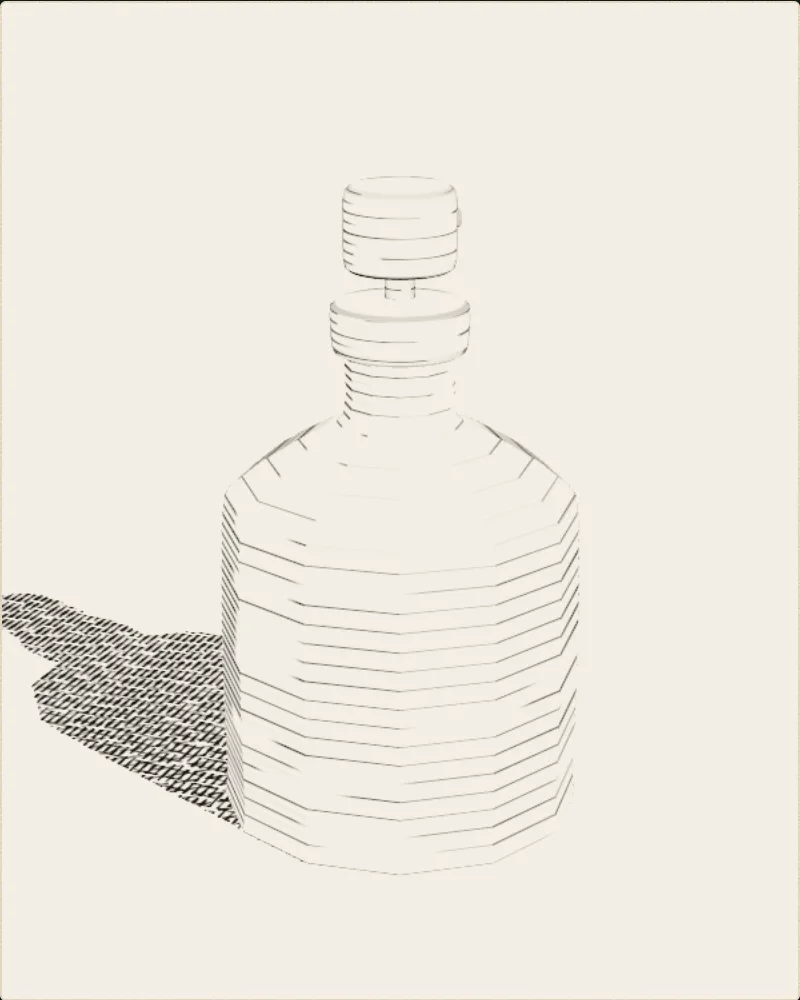
Step 1 of 4 · The bottle: the proof flacon, with an atomiser.
Each step is listed below, with its model to place in your room and its files.
The four steps
Step 1 of 4 · in-house model
The bottle: the proof flacon, with an atomiser
An in-house model (Radler Parfums): the proof flacon with an atomiser head. A proof, not a product; nominal size.
The house’s proof flacon, with an atomiser head on its neck. Press the atomiser and the liquid leaves the nozzle as a mist.
Here, press “Press the atomiser”, or tap the atomiser on the 3D view. On a phone, “Tilt to turn” turns the flacon as you tilt the phone; a short vibration marks the spray where the browser allows it (Android), and an iPhone, which has no web vibration, shows a brief ring on the button instead.
To place it in your room, open this page on an iPhone or iPad (AR Quick Look) or an Android phone (Google Scene Viewer). The files below open in any 3D viewer.
- In the room
- 9.6 cm tall, 5.4 cm across. Nominal size, modelled, not measured
- Source
- Radler Parfums, in-house (the proof flacon’s glass and liquid as filed; the atomiser head and the mist modelled for the journey)
- Licence
- in-house
- Model
- 2,576 triangles
The files GLB 81 KB · USDZ 178 KB
Step 2 of 4 · in-house model
The mist: the mist, held in the air
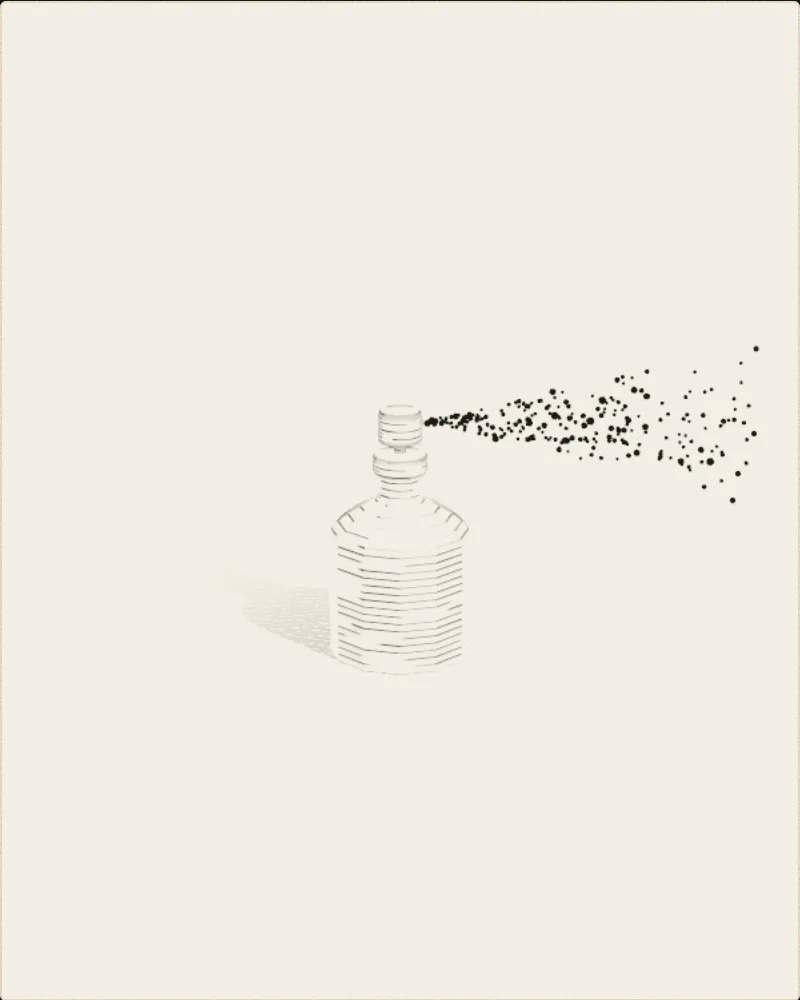
An in-house model (Radler Parfums): the proof flacon a moment after its atomiser is pressed, the spray held in mid-air. A proof, not a product; a drawn mist, not a simulation, its droplets drawn far larger than real ones.
The droplets leave the nozzle in a cone, slow down, spread and begin to fall; then they shrink away, and what is left is in the air of the room. The mist is drawn, not simulated, and every droplet is drawn far larger than a real one.
“Spray again” replays the press and holds it; “Let it drift” lets the droplets go. Turn the held spray with the arrow keys or a drag.
To place it in your room, open this page on an iPhone or iPad (AR Quick Look) or an Android phone (Google Scene Viewer). The files below open in any 3D viewer.
- In the room
- 12 cm tall, 15.9 cm across. Nominal size, modelled, not measured
- Source
- Radler Parfums, in-house (the proof flacon’s glass and liquid as filed; the atomiser head and the mist modelled for the journey)
- Licence
- in-house
- Model
- 7,516 triangles
The files GLB 182 KB · USDZ 420 KB
Step 3 of 4 · fragrance material
The rose: a red rose
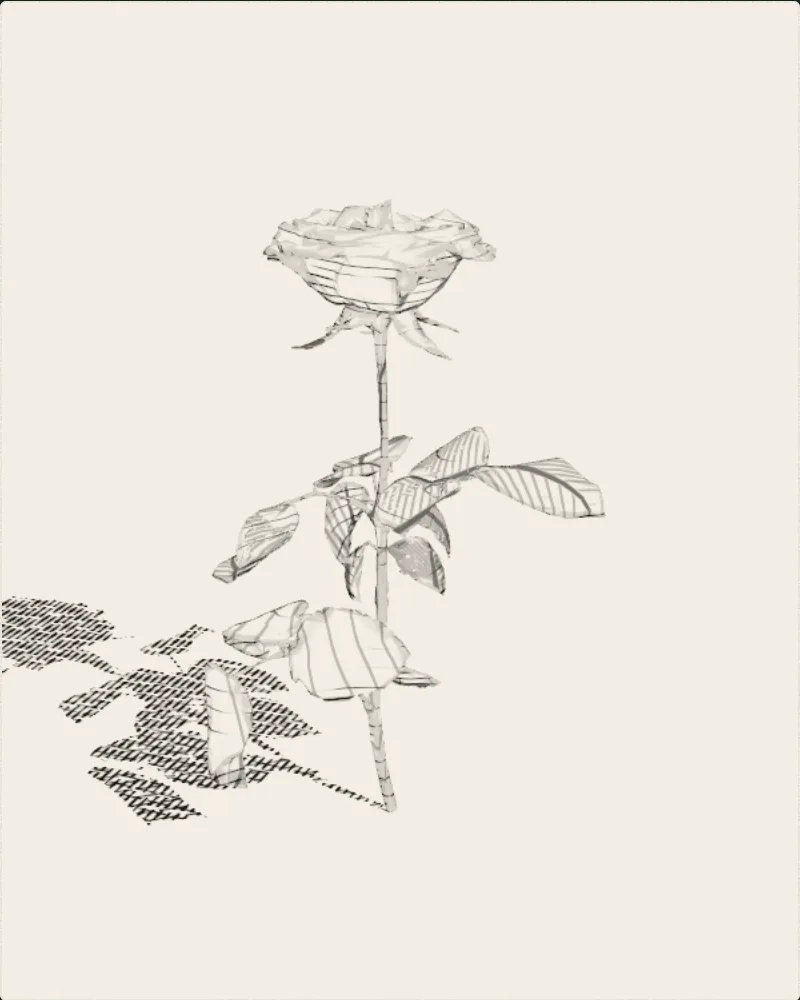
A 3D model of a garden red rose by Lassi Kaukonen (CC BY 4.0), not a botanical specimen of Rosa × damascena; simplified and scaled to about life size here.
The damask rose, Rosa damascena Mill., is the perfumer’s rose. Its flowers are picked with the sepals, in the early morning, for a few weeks each spring; from them come rose otto by distillation and rose absolute by solvent extraction. The model is a garden rose, not a Damask rose: it shows the flower.
The numbered points on the rose open its records: the plant, the two materials made from its petals, and the molecules they are known for. The same links are listed here. Zoom with a pinch, the keys + and −, or the slider.
Points on the model
- The plant: the damask rose (Rosa damascena), its record
- Distilled from the petals: rose otto, its record
- Extracted from the petals: rose absolute, its record
- A main molecule of rose otto: citronellol, its record
- A main molecule of rose absolute: 2-phenylethyl alcohol, its record
- In rose oil, in traces: β-damascenone, its record
To place it in your room, open this page on an iPhone or iPad (AR Quick Look) or an Android phone (Google Scene Viewer). The files below open in any 3D viewer.
- In the room
- 45 cm tall, 27.8 cm across. No measurement: scaled to 45 cm, about life size (a choice)
- Licence
- CC BY 4.0 · credit: "Red rose" by Lassi Kaukonen, CC BY 4.0, simplified, rescaled and its leaf margins serrated (changes made)
- Model
- 14,101 triangles (simplified from 214,660)
The files GLB 830 KB · USDZ 1.4 MB
Step 4 of 4 · molecule
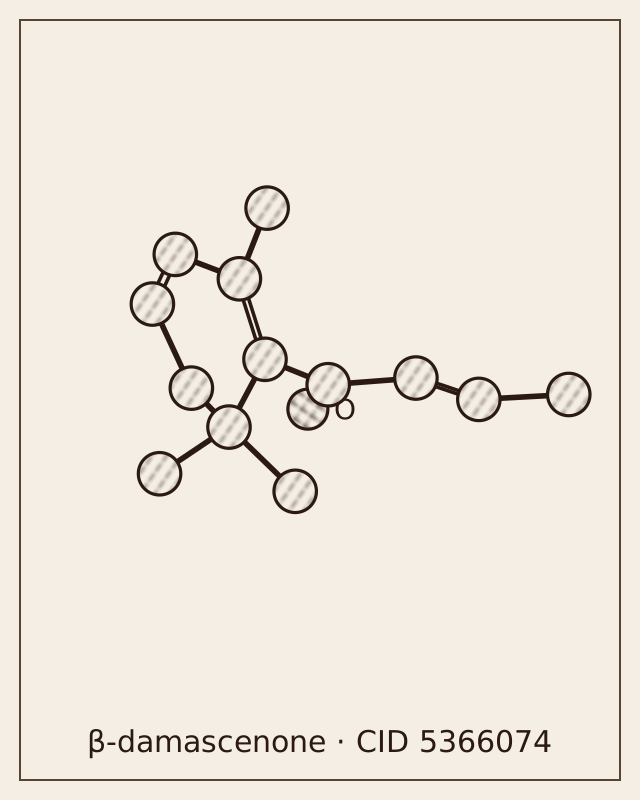
The molecule: the β-damascenone molecule
A computed 3D conformer — modeled, not a photograph of a molecule. PubChem CID 5366074.
β-Damascenone is a C13 ketone that forms when carotenoids break down, and one of the key compounds of rose oil. It is present in traces. What turns here is PubChem’s computed 3D conformer of it: a model, not a photograph of a molecule.
Pinch to zoom into it, or use the keys + and − or the slider; turn it with the arrow keys or a drag.
To place it in your room, open this page on an iPhone or iPad (AR Quick Look) or an Android phone (Google Scene Viewer). The files below open in any 3D viewer.
- In the room
- scaled so that one ångström is 4 cm (about 400 million times life size): 22.7 cm tall, 32.4 cm across
- Atoms
- 13 carbon, 1 oxygen · 14 bonds between them
- Colours
- carbon: ink sepia-2; oxygen: rose highlight; bonds: brass. Colour is a convention here and never carries the meaning alone: the letters on the drawing and this list say which atom is which.
- Source
- PubChem, CID 5366074 (National Center for Biotechnology Information), its computed 3D conformer as filed on this record
- Licence
- PubChem’s data are public (NCBI); the model and its drawing were made for this site from those coordinates
The files GLB 22 KB · USDZ 51 KB
the models as data: /data/ar/ar-set.json · every credit on the credits · everything that can stand in your room