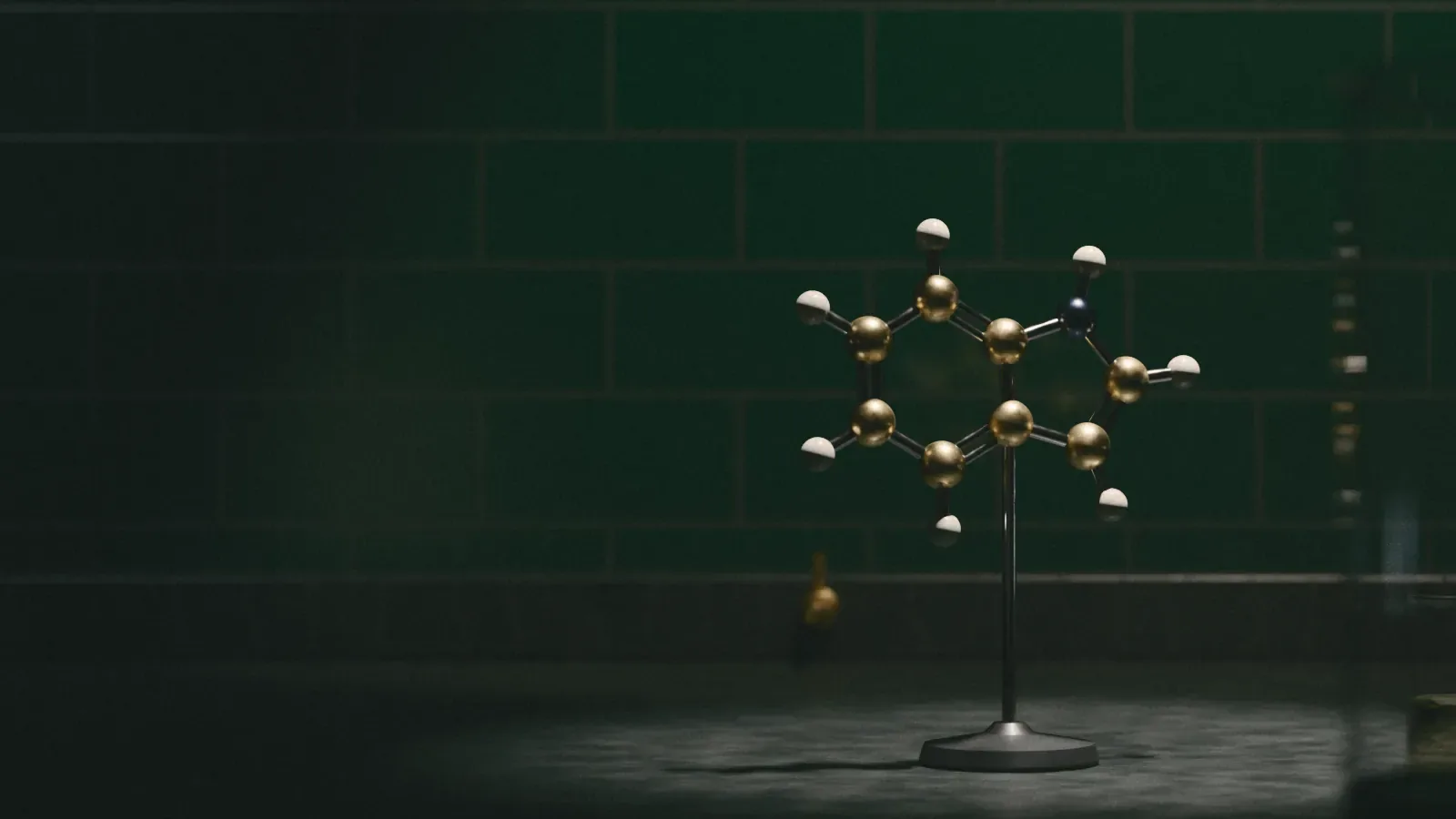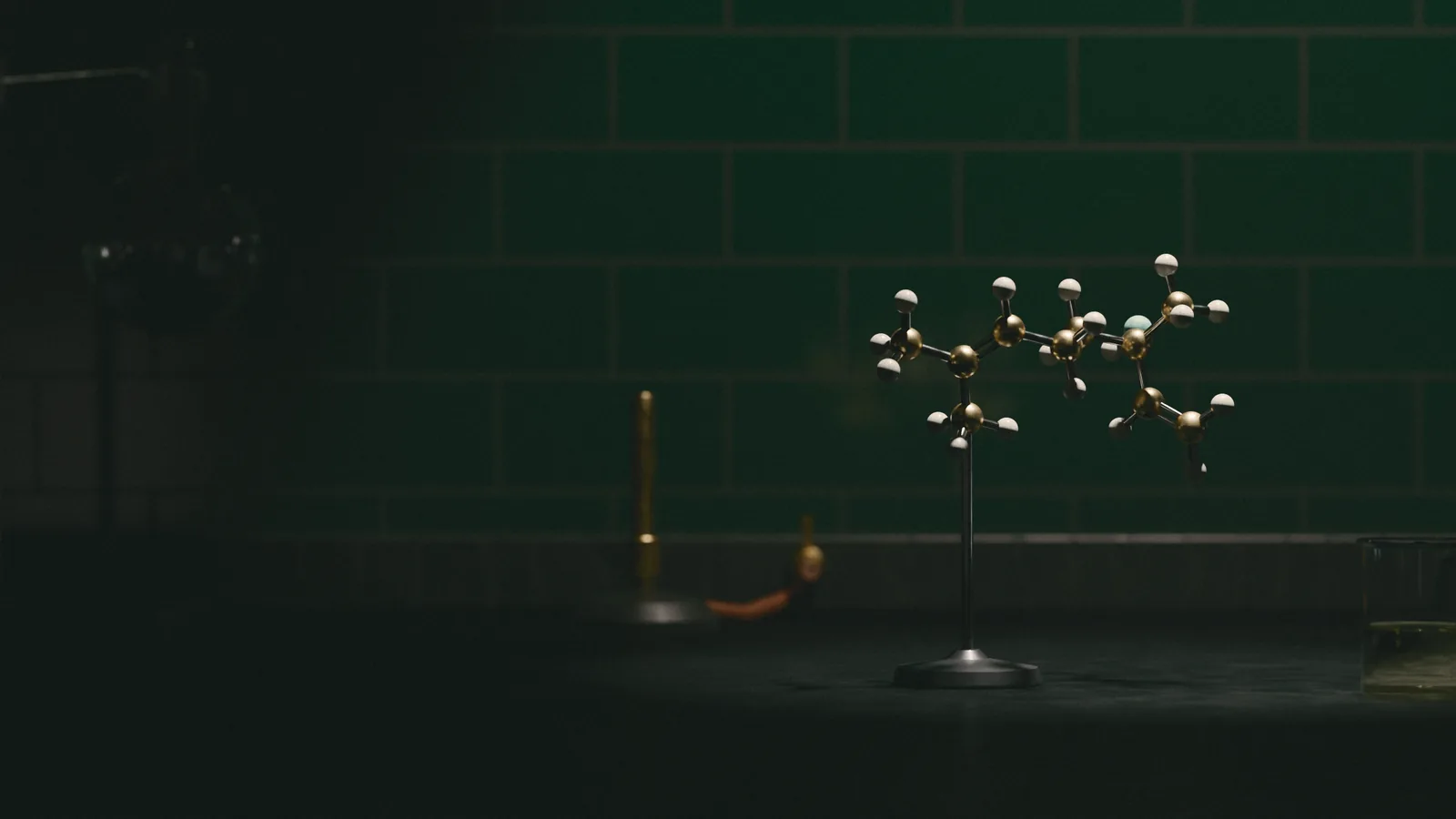
The Science · Chapter 1 of 5
The Great Paradox
The distinction between natural and synthetic is largely a marketing illusion: the chemistry doesn’t respect it.
About 29 minutes of reading
The Great Paradox
The distinction between “natural” and “synthetic” is largely a marketing illusion — the chemistry doesn’t respect it.
A Rose Is Not “Rose”
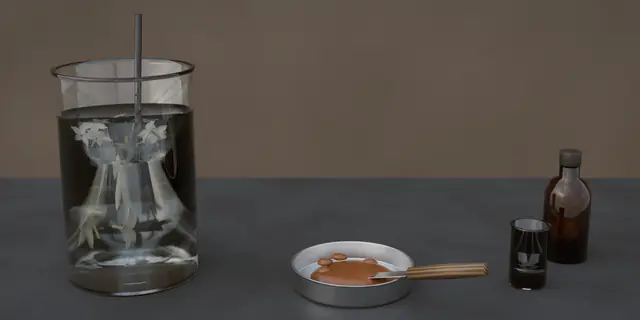
When you smell a rose, you’re not smelling “rose.” You’re smelling hundreds of individual molecules hitting your olfactory receptors simultaneously. Your brain assembles this molecular symphony into the perception we call “rose.”
These molecules have names: citronellol, geraniol, nerol, linalool, phenylethyl alcohol, damascenone, rose oxide, eugenol, methyl eugenol, farnesol — and hundreds more. Each one is a distinct chemical compound with its own molecular structure.
Here’s the paradox: when a chemist synthesizes linalool in a laboratory, it is chemically identical — atom for atom — to the linalool in a rose petal. It is the same molecule. C₁₀H₁₈O arranged in exactly the same way.
Rosa damascena oil contains hundreds of identified compounds, among them:
The Molecular Truth
A molecule of vanillin doesn’t “remember” whether it came from a vanilla bean in Madagascar or a chemical reactor in New Jersey. C₈H₈O₃ is C₈H₈O₃. Your nose cannot distinguish between them because there is literally nothing to distinguish.
Plants synthesize molecules using enzymes and sunlight. Labs synthesize molecules using reagents and heat. The end product is the same. Nature doesn’t have a monopoly on molecular assembly. Chemistry is chemistry, whether it happens in a cell or a flask.
Natural extracts contain hundreds of molecules in varying proportions — some we can’t even identify yet. Synthetics are pure single molecules. Neither is better. A perfumer needs both: complexity AND precision.
Without synthetics, there would be no Chanel No. 5 (aldehydes), no Dior Sauvage (Ambroxan), no aquatic fragrances (Calone). Synthetics expanded the perfumer’s palette far beyond what nature could supply.
“Natural” doesn’t mean safe. Some naturals are restricted by the IFRA Standards (the industry’s own rules, which are not law in the US) and, for a few of their components, by EU law, because they can sensitize skin or react with sunlight; natural musk came from an animal now protected in international trade under CITES. Some synthetics were developed as alternatives to their natural counterparts.
Many perfumers don’t choose sides. They use naturals for complexity and warmth, synthetics for precision and effects impossible in nature. The art is in the blending.
Deep Dive: How Molecules Work
Understanding molecular structure reveals why perfumery is fundamentally chemistry — and why the natural/synthetic divide is meaningless at the atomic level.
Case Study: Jasmine
Jasmine absolute contains a molecule called indole. At high concentrations, indole smells fecal — it is one of the molecules in that smell. But at the trace levels found in jasmine, it creates that heady, narcotic, almost scandalous quality that makes jasmine so intoxicating.
This is the same indole molecule whether it comes from jasmine flowers or a chemical supplier. The magic isn’t in the source — it’s in the concentration and context.
A perfumer creating a jasmine accord might use: natural jasmine absolute (for complexity) + synthetic indole (for control) + synthetic hedione (for radiance) + synthetic benzyl acetate (for freshness). The result smells more “jasmine” than jasmine absolute alone. This is the art.
Same molecule. Opposite perception.
This is chemistry, not magic.
The Science of Smell
Your nose is a remarkably fine chemical detector. Understanding how it works reveals why perfumery is both art and science.
A molecule meets a receptor: follow vanillin from a paper strip to a receptor, the signal inside the cell and a nerve impulse, step by step, in an educational model with its sources.
A postage-stamp-sized patch of tissue at the top of your nasal cavity holds millions of olfactory receptor neurons. Each neuron has cilia coated with receptor proteins that bind to specific molecular shapes. Dogs have far more. But humans have something dogs don’t: language to describe what we smell.
You have several hundred types of olfactory receptors. Each odor activates its own combination — like a barcode. A 2014 Science paper put the number of distinguishable odor mixtures at over a trillion — though a later rebuttal argued the math overstates it, so treat it as a vivid estimate, not a settled fact. Either way, the range dwarfs the few thousand scents we’ve actually named.
Smell reaches the brain’s emotional and memory regions by an unusually short route, which is often given as the reason scent can bring back a memory so suddenly. How direct that route is, and how much it explains, is still studied.
Your olfactory receptor genes form one of the biggest gene families in your genome — and they vary wildly between people. Some people perceive certain molecules only faintly or not at all (specific anosmias) — Iso E Super is an often-cited case. This is one reason perfume smells different to everyone.
Smell adapts quickly. After a while you stop consciously perceiving a constant odor. This is nose blindness. Evolutionarily, it let us detect changes (predator! food!) rather than constants. In perfumery, it means you can’t smell your own fragrance — but everyone else can.
You smell through two pathways: orthonasal (inhaling through nose) and retronasal (molecules rising from mouth to nasal cavity). Much of what you call “taste” is actually retronasal smell. Block your nose, and coffee tastes like bitter water.
Aroma Chemistry: The Molecular Families
All aromatic compounds belong to distinct chemical families, each with characteristic structures and scent profiles. Understanding these families reveals the architecture of fragrance.
Analytical Chemistry: How Perfumers See Molecules
Modern perfumery relies on analytical instruments that can identify individual molecules in complex mixtures. These tools reveal what the nose perceives but cannot name.
The workhorse of aroma analysis. Separates a complex mixture into individual compounds (GC) then identifies each by its molecular fingerprint (MS). A rose absolute can yield hundreds of peaks on a chromatogram — each peak a distinct molecule. The perfumer’s microscope for invisible chemistry.
The human nose as detector. As compounds elute from the GC column, a trained evaluator sniffs the effluent and describes each odor. Reveals which of hundreds of compounds actually contribute to perceived aroma. Many abundant compounds have no smell; trace compounds often dominate perception.
Serial dilution technique to rank odorants by potency. Sample is diluted 1:2, 1:4, 1:8, etc. until each compound becomes undetectable. The “Flavor Dilution Factor” (FD) reveals true impact — a trace compound can outrank one present in far greater amounts.
“Combined Hedonic Aroma Response Measurement.” Evaluators note both when they smell something AND how intense it is as compounds elute. Produces aromagram peaks proportional to sensory impact. Developed at Cornell University. Superior to simple sniff-port detection for complex matrices.
A fiber coated with adsorbent material is exposed to headspace above a sample. Volatile compounds concentrate on the fiber, then are thermally desorbed into the GC. Non-destructive, solvent-free, can analyze living systems. Essential for headspace analysis of flowers, foods, even crime scenes.
Trained human panels evaluate odor quality, intensity, and character. Statistical analysis removes individual bias. Descriptive panels use standardized vocabulary; discrimination panels detect differences between samples. The instrument (the nose) that no machine can fully replace.
Aroma Chemistry in Food & Beverage
The same molecules that define perfumery create the flavor profiles of wine, coffee, spices, and cuisine. Flavor and fragrance are one science, two applications.
Landmark Molecules: The Ones That Changed Everything
Some molecules didn’t just create fragrances — they created entire categories, changed the industry, or revealed something profound about olfaction.
Synthesized by Perkin in 1868: an early aroma molecule made in a laboratory. Hay-like, tonka bean sweetness. Paul Parquet used it in Fougère Royale for Houbigant, which gave its name to the fougère family.
Fatty, waxy, slightly metallic. Ernest Beaux used them prominently in Chanel No. 5. The “lift” that makes No. 5 feel abstract rather than floral. An effect no single natural material gives.
Methyl dihydrojasmonate. Creates radiance — the sense that a fragrance is floating around you rather than sitting on skin. Dior’s Eau Sauvage (1966, Edmond Roudnitska) is often cited for its use. Now found in a great many fresh fragrances.
Woody and velvety. Some people perceive it only faintly or not at all — a specific anosmia. Those who can describe it as “skin scent.” Geza Schoen built an entire fragrance from it: Molecule 01. It proved a single synthetic could be a complete perfume.
A benzodioxepinone. Smells like sea breeze, watermelon, ozone — scents that don’t exist in extractable nature. It is widely linked to the marine fragrances of the late 1980s and 1990s, Issey Miyake’s L’Eau d’Issey among them.
Derived from clary sage sclareol. Warm, salty, mineral — smells like skin after a day at the beach. A synthetic facet of ambergris, central to many recent masculine fragrances.
The white musk in every “clean laundry” scent. Powdery, sweet, abstract cleanliness. Its persistence in the environment is monitored and debated. Still used because little else smells quite like “clean.”
Cotton candy sweetness — literally the smell of caramelized sugar. Its generous use in Mugler’s Angel is widely credited with opening the gourmand category. Angel proved excess could be art.
Woody-musky with a velvety, fabric-like quality. Smells like cashmere feels. Found in many “cozy” fragrances. A synthetic that creates a tactile impression — the smell of softness.
The Numbers Behind Perfumery
Market sizes, prices per kilo, flowers per gram: perfumery’s favorite numbers travel from page to page without a source. The house leaves them out until each one can be traced to one.
Why Certain Combinations Work
Some accords have been used for centuries because they exploit fundamental principles of molecular interaction and olfactory perception.
What Even Perfumers Don’t Discuss
The deep knowledge. The uncomfortable truths. The mysteries that remain unsolved.
The “shape theory” of smell (molecules fit receptors like keys) doesn’t explain everything. Luca Turin proposed that receptors detect molecular vibration frequencies via quantum tunneling. Molecules with identical shapes but different vibrations smell different. Deuterated musks (hydrogen replaced with deuterium) smell different despite identical shape. The nose may be a quantum detector. Still controversial.
The bacteria living on your skin can transform some fragrance molecules into different compounds, which is one proposed reason a perfume can smell different from one person to the next. Your skin is a living surface, not a blotter.
Most “luxury” fragrances aren’t created by the brand. They’re commissioned from fragrance houses (Givaudan, Firmenich (now DSM-Firmenich), IFF, Symrise) via competitive briefs. Multiple perfumers submit formulas blind. The brand picks a winner. The same perfumer might create for Dior and drugstore brands. Much of a bottle’s price is marketing and packaging rather than the liquid.
The International Fragrance Association’s Standards limit or prohibit the use of many materials; they are the industry’s own rules, and some countries’ laws restrict materials too. Oakmoss and citral are among the restricted materials. Many classics have been reformulated as a result, and some perfumers regret what was lost.
“Captives” are proprietary molecules owned by fragrance houses and not sold to competitors. Firmenich’s Ambrox. Givaudan’s Safraleine. IFF’s Iso E Super variants. When something in a fragrance smells unfamiliar, it may be a captive. Indie perfumers can’t access them. This creates invisible monopolies. Some captives eventually go “open” after patents expire.
In commercial perfumery, the fragrance concentrate is a small share of the retail price. The rest is packaging, marketing, distribution and profit; niche houses often spend more on the liquid. Know what things cost.
Your nose fatigues to different molecules at different rates. Some fade from awareness in minutes, others take far longer. The coffee beans on the perfume counter are meant to “reset” your nose, but a small 2011 study found sniffing them worked no better than sniffing plain air (Grosofsky, Haupert and Versteeg, Perceptual and Motor Skills 112: 536–538). A break in fresh air, or smelling your own skin (a familiar baseline), is the usual advice. Fatigue is cumulative across a day of testing.
Many “oud fragrances” contain little or no actual oud. They use oud accords built from other materials, because real oud is scarce and very expensive. Wild agarwood comes from Aquilaria trees whose trade is controlled.
Fixatives don’t “fix” scent to skin — they slow evaporation by forming molecular matrices. Heavy molecules (musks, resins) evaporate slowly and trap lighter molecules in their structure. Benzoin, labdanum, and ambroxide create “cages” around volatile top notes. This is why base notes make the entire fragrance last longer. It’s physics, not magic.
Real ambergris forms in the gut of the sperm whale. It can float in the ocean for years, oxidizing into a complex, animalic-sweet material. Its legal status differs from country to country. Virtually all “amber” in perfumery is synthetic or labdanum-based. Finding real ambergris on a beach is like finding treasure.
Everyone has “smell blindness” to certain molecules — often without knowing. Androstenone, Iso E Super and some musks are well-known cases. For β-ionone, genetic variation changes how people perceive it. You may love a fragrance others find offensive because you literally can’t smell certain components. This isn’t preference — it’s genetics.
A fine fragrance can contain dozens of ingredients, a masterwork many more. But the palette available to perfumers is finite. Every perfumer works from the same basic palette. Creativity lies in proportion, combination, and vision — not access to secret ingredients. The constraint is the art. Anyone can buy linalool. Few know what to do with it.
The Uncomfortable Economics
Rare Materials Most Never Encounter
Iris rhizomes dried and aged for years, then steam-distilled. A costly natural material. The powdery, violet-carrot scent of old-money luxury, used in tiny quantities; it takes a great weight of roots to make a little. Most “iris” fragrances use synthetic irones instead.
Secretion from the perineal glands of the African civet. Fecal, animalic, horrifying undiluted — but at extreme dilution, adds warmth and “animal presence” nothing else provides. Now largely replaced with synthetic civetone for ethical reasons.
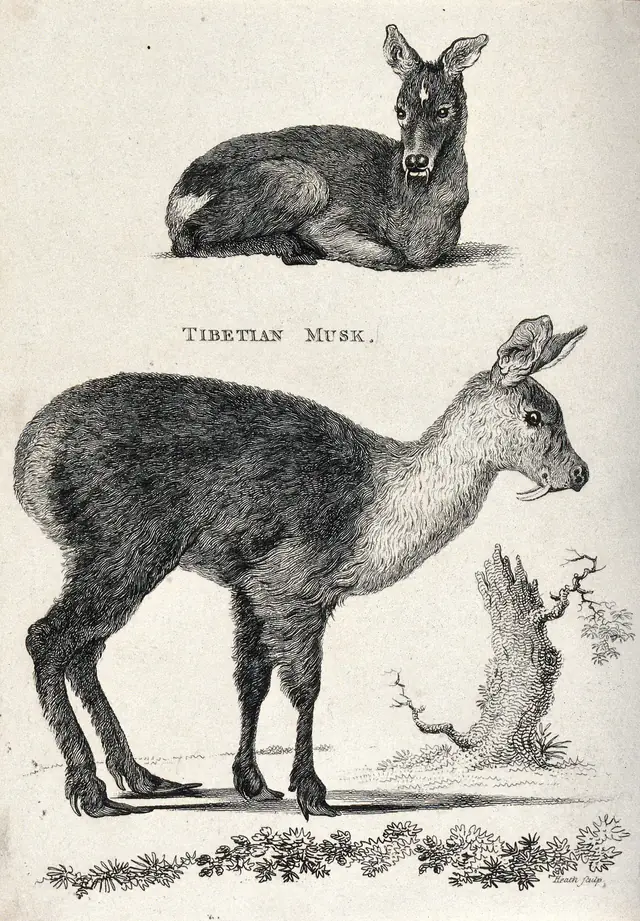
From the musk pod of the male musk deer, a protected species whose trade is controlled. The “holy grail” of animalic notes, and the reason perfumery turned to synthetic musks.
From the golden-orange flowers of Magnolia champaca, sacred in Hindu and Buddhist traditions. Tea-like, apricot, intensely floral, slightly rubbery. Extraordinarily difficult to extract — flowers must be processed within hours of picking. A signature of vintage Indian attars. Increasingly rare as habitat shrinks.
Fossilized urine from the rock hyrax, a small African mammal. Deposits accumulate over thousands of years in the same locations (hyraxes are territorial). Called “Africa Stone.” Complex, animalic, tobacco-honey character. Used as an ethical alternative to other animalics. Collected from wild deposits — not harmed animals. Strange, rare, historically used in traditional medicine.
From Boronia megastigma, a wildflower native only to Western Australia. Raspberry, hay, violet, ionone-rich. A complex natural with a very low yield. Almost never used in commercial perfumery due to cost and scarcity. Appears occasionally in ultra-niche compositions. If you’ve smelled it, you remember it.
The Neuroscience Nobody Explains
Historical Secrets
The legend says it was a lab accident — an assistant overdosed the aldehydes and Coco Chanel loved the “mistake.” True or not, the aldehydes were striking for their time, and No. 5 became very widely known. Sometimes errors are the art.
Napoleon was a documented cologne obsessive. Court records show a standing order with his perfumer Chardin for roughly 50 bottles a month, and a surviving 1806 bill lists 162 bottles in a single quarter. He used it lavishly — on his skin, in the bath, even reportedly on sugar. (The popular “60 bottles of 4711” line is a later mix-up: the earliest “flasks a month” account traces to Farina’s Eau Admirable, not 4711.) Cologne as daily ritual.
In the 1910s, Caron’s Ernest Daltroff — working with the de Laire family — built a proprietary base called Mousse de Saxe: leather, geranium, licorice and vanilla, never fully disclosed. It runs through Caron’s classics, from Tabac Blond to Nuit de Noël. Modern perfumers have attempted reconstructions; the original formula has never been published.
The Italian queen brought perfumed gloves to France — a fashion that, legend insists, also served as a delivery mechanism for poison. Her personal perfumer, René le Florentin, was rumored to lace gloves with arsenic-infused scents, and enemies who received her “gifts” were said to die mysterious deaths. History records no verdict — but the legend endured because it was plausible: perfumery and poison-craft genuinely shared workshops, materials, and discretion. The craft has dark origins.
For over a century, Guerlain used a secret base called Guerlinade — a signature accord said to run through many of the house’s creations, giving Guerlains a distinctive “family feel.” Its exact formula has never been published.
Industry lore holds that a fire at Givaudan in the early 1920s destroyed archives of formula books dating to the 1800s. Whatever the precise event, vast numbers of historical compositions from that era survive nowhere. Reconstructions exist for famous scents, but countless experiments, failures, and forgotten masterpieces became ash. The history of perfumery has gaps we’ll never fill.
9 sourced · 14 labeled · 17 unsourced
Evidence for this section: 9 sourced · 14 labeled · 17 unsourced
Sources cited here include: PubChem Compound Summary for CID 6549, Linalool; PubChem Compound Summary for CID 1183, Vanillin; Osmothèque, Conservatoire international des parfums
The molecules that changed everything
"The distinction between natural and synthetic is not a distinction between authentic and artificial. It is a distinction between where a molecule originates. Linalool from lavender and linalool from a laboratory are chemically indistinguishable — they are the same compound. What synthetics offer is access to olfactory experiences that nature cannot economically provide, and to entirely new categories of scent that have no counterpart in the natural world."
The Extended Palette
Beyond the icons — essential aroma chemicals that define modern perfumery’s creative range.
28 sourced · 3 labeled · 3 unsourced
Evidence for this section: 28 sourced · 3 labeled · 3 unsourced
Sources cited here include: PubChem Compound Summary for CID 10857465, (-)-Ambroxide. National Center for Biotechnology Information; PubChem Compound Summary for CID 10947, Muskone. National Center for Biotechnology Information; PubChem Compound Summary for CID 323, Coumarin
Natural vs Synthetic — The Truth
A synthetic molecule can be identical to a natural one, atom for atom. Natural extracts contain many compounds, some of which barely contribute to the scent and some of which are known allergens. Much of the natural-versus-synthetic debate in perfumery is about marketing, not chemistry.
The labeling question
What may be called “natural” on a label depends on the rules of each market and on how the ingredient was made, not only on the molecule. A molecule taken from a plant through several chemical steps can end up with a different label from the identical molecule made directly in a laboratory, though no chemical analysis of the pure molecule could tell them apart.
What “100 % natural” contains
A natural rose absolute holds hundreds of compounds, of which a handful carry most of the rose character; the rest include waxes, traces, and substances such as geraniol, citronellol, eugenol and linalool that EU cosmetics rules list as allergens to be declared on labels. A rose reconstruction from a few pure aroma chemicals can be more stable and more consistent from batch to batch.
| Molecule | Natural source | Made in the laboratory | The difference |
|---|---|---|---|
| Linalool | Lavender, coriander, rosewood | Linalool (synthetic) | The same molecule; the synthetic is usually purer than the natural fraction |
| Geraniol | Rose, geranium, citronella | Geraniol (synthetic) | The same molecule; the natural carries companions such as geranyl acetate and citronellol |
| Vanillin | Vanilla bean | Vanillin from lignin or guaiacol | The same molecule; natural vanilla also carries many other compounds that shape its character |
| Coumarin | Tonka bean, sweet clover | Coumarin (synthetic) | The same molecule; natural sources vary, the synthetic is consistent |
| Eugenol | Clove, basil, bay leaf | Eugenol (synthetic) | The same molecule; clove oil is already mostly eugenol |
the house’s own summary; the identity of each molecule is PubChem’s. Yields, purities and prices the page once printed are withheld until sourced.
The price of a “natural” is mostly the story of where it came from and how hard it was to extract. The molecule on the skin is the same molecule a reactor can make. Neither is better — but the price difference is not explained by chemistry.
1 sourced · 1 labeled
Evidence for this section: 1 sourced · 1 labeled
Sources cited here include: Regulation (EC) No 1223/2009 of the European Parliament and of the Council of 30 November 2009 on cosmetic products…
Aroma Chemicals Reference
A comprehensive guide to the molecules perfumers use daily — organized by olfactory category. Each represents a distinct creative tool in the perfumer’s organ.
| Material | Character |
|---|---|
| Aldehydes The sparkle and lift of classical perfumery — waxy, soapy, and effervescent. | |
| Aldehyde C-9 (Nonanal) | Rose-like, waxy, slightly fatty. Fresh green rose character. |
| Aldehyde C-10 (Decanal) | Orange peel, waxy citrus. Key to aldehydic florals. |
| Aldehyde C-11 (Undecanal) | Waxy, clean, fresh. The classic aldehyde character. |
| Aldehyde C-12 MNA | Metallic, dry, powdery. The “champagne bubble” effect. |
| Aldehyde C-12 Lauric | Violet leaf, waxy, slightly soapy. |
| Adoxal | Marine ozone with linen and metallic florals. Givaudan captive. |
| Musks Skin-like warmth and sensuality — the foundation of modern perfumery. | |
| Muscone | The natural ideal. 15-membered macrocycle. Warm, animalic, clean. |
| Galaxolide | Polycyclic white musk. Clean, powdery, ubiquitous. |
| Helvetolide | Pear-musk with fruity opening. Firmenich captive. |
| Habanolide | Warm macrocyclic musk with subtle metallic edge. |
| Ethylene Brassylate | Soft, powdery musk with excellent substantivity. |
| Muscenone | Clean, bright macrocyclic. Less animalic than muscone. |
| Woods The architectural depth that grounds compositions — from cedar to sandalwood. | |
| Iso E Super | Velvety cedarwood. Some perceive it only faintly or not at all. |
| Javanol | Premium sandalwood replacer. Creamy, milky, subtle citrus. |
| Cashmeran | Warm, musky-woody. Cozy cashmere character. |
| Norlimbanol | Intense dry woody-amber. Use at trace levels. |
| Cedryl Acetate | Dry, woody with slight leather undertones. |
| Vertofix | Woody-amber with vetiver facets (IFF). |
| Ambers & Resins Warmth, depth, and the sweet-resinous heart of oriental perfumery. | |
| Ambroxan | Salty, mineral, skin-like. Ambergris replacement. |
| Amber Xtreme | Intense amber with woody undertones. IFF. |
| Benzyl Benzoate | Balsamic, slightly almond. Fixative and diluent. |
| Benzoin Absolute | Sweet, warm, vanilla-like balsam. |
| Labdanum Absolute | Rich, amber, leathery. Core of amber accords. |
| Tolu Balsam | Sweet, cinnamon-vanilla with balsamic depth. |
| Florals The heart of perfumery — from delicate petals to narcotic white flowers. | |
| Hedione | Fresh, citric, slightly floral (on record). The house’s reading: radiant jasmine-tea. Creates diffusion and aura. |
| Phenylethyl alcohol | Rose, floral, slightly green. Core rose molecule. |
| Linalool | Floral-woody, clean. Found in 200+ plants. |
| Hydroxycitronellal | Lily of the valley, green, fresh floral. |
| Lyral | Muguet; prohibited in cosmetic products in the EU since 2021 (EU law: Regulation 2017/1410) and restricted by an IFRA Standard (the industry’s own rules, not law in the US). Powerful lily of the valley. |
| α-Isomethyl Ionone | Violet, powdery, orris-like. Iris core. |
| Citrus & Fruity Brightness and sparkle — the top-note energy that opens compositions. | |
| Limonene | Citrus backbone. Orange, lemon, bright. |
| Linalyl Acetate | Fruity-floral lavender. Bergamot character. |
| γ-Decalactone | Peach, creamy, fruity. Key gourmand molecule. |
| δ-Damascone | Rose-fruity, blackcurrant, powerful. |
| Nectaryl | Juicy nectarine, fresh peach. Givaudan captive. |
| Calone | Marine, watermelon, ozone. Linked with the marine fragrances of the late 1980s and 1990s. |
| Spices & Aromatics Warmth, complexity, and the exotic heart of oriental compositions. | |
| Eugenol | Clove, carnation, warm spice. Dental character. |
| Cinnamic Aldehyde | Cinnamon, warm, spicy. Core cinnamon. |
| Safranal | Saffron, medicinal, hay-like. Expensive. |
| Cardamom CO₂ | Fresh, green-spicy, eucalyptus facets. |
| Pink Pepper CO₂ | Fruity-spicy, rosy, dry peppery. |
| Safraleine | Saffron replacer. Leathery, herbal, warm. |
| Animalics & Leather The provocative edge — warmth, intimacy, and challenging beauty. | |
| Civet (synthetic base) | Fecal-musky, animalic warmth. |
| Castoreum Absolute | Leathery, birch tar, smoky animalic. |
| Isobutyl Quinoline | Leather, roots; a smoky, bitter leather drydown. |
| Skatole | Fecal at high dose; floral at trace. Jasmine essential. |
| Indole | Narcotic jasmine. Concentration-dependent character. |
| Suederal | Suede leather, soft, slightly powdery. |
the house’s own descriptions of materials in daily use; captive and trade names as their houses use them.
1 sourced · 1 labeled
Evidence for this section: 1 sourced · 1 labeled
Sources cited here include: Commission Regulation (EU) 2017/1410 of 2 August 2017 amending Annexes II and III to Regulation (EC) No 1223/2009
The Captive Molecule Catalog
The large fragrance houses keep portfolios of proprietary aroma chemicals, “captives”, that outside perfumers cannot buy. They give the houses’ own creations a character that is hard to copy — working without them is like cooking without spices that exist in only a few kitchens.
| Molecule | House | Odor character | Where it is used |
|---|---|---|---|
| Ambrox® Super | DSM-Firmenich | Ambergris, skin-warm, radiant | Ambers and skin scents |
| Ambrofix™ | Givaudan | A cleaner ambergris variant | Ambery bases |
| Amber Xtreme® | IFF | Powerful amber-woody | Amber-woody accords |
| Orcanox™ | Mane | Ambergris-like, warm marine | Ambery and marine accords |
| Mahonial® | Givaudan | Lily of the valley, fresh muguet | Muguet accords |
| Nympheal™ | DSM-Firmenich | Muguet, watery-floral | Muguet accords |
| Cascalone® | DSM-Firmenich | Powerful marine-ozonic | Aquatic fragrances |
| Clearwood® Prisma | DSM-Firmenich | Patchouli-like, clean woody | Modern patchouli accords |
| Akigalawood® | Givaudan | Woody-spicy, patchouli-incense | Woody and incense accords |
| Norlimbanol | DSM-Firmenich | Dry vetiver-cedar woody amplifier | Vetiver-woody accords |
| Firsantol™ | DSM-Firmenich | Sandalwood-like, smooth | Sandalwood accords |
| Saffiano | IFF | Suede-like, dry leather | Leather accords |
houses and trade names as this page gives them, not yet checked against each supplier’s own catalog. Market status and the named fragrances once shown here are withheld until sourced.
1 sourced · 1 unsourced
Evidence for this section: 1 sourced · 1 unsourced
Sources cited here include: Agreement on Trade-Related Aspects of Intellectual Property Rights (TRIPS Agreement), Annex 1C of the Marrakesh…
The Ghost Molecule
Iso E Super sits — by industry lore, no measured count — in a great many contemporary fine fragrances, Molecule 01 most famously. Some people perceive it only faintly or not at all. Not nose-blindness: a specific anosmia, thought to be genetic. How common it is has not been settled by a peer-reviewed study, so no figure is given here. They are wearing a fragrance that doesn’t exist for them.
Iso E Super (1-(2,3,8,8-tetramethyl-1,3,4,5,6,7-hexahydronaphthalen-2-yl)ethanone, molecular formula C₁₆H₂₆O) was first made in the early 1970s by the chemist John B. Hall (patented with Sanders in 1975) through a Diels-Alder reaction between myrcene and methyl pentenone. Hall is also credited with Cashmeran.
What is sold as “Iso E Super” is a mixture of isomers, and they are not equal. A minor isomer (Arborone) is reported to be far more potent than the main one, so much of the woody-velvety character is thought to come from a small share of the bottle. Published figures for the proportions and thresholds disagree, so none is quoted here.
| Iso E Super | What is known |
|---|---|
| Production | Made in large quantities; a widely used woody aroma chemical |
| Specific anosmia | Thought to be genetic. Published prevalence estimates vary widely; none is quoted here until a peer-reviewed source is cited. |
| Built around it | Molecule 01 and Escentric 01 are famous for it; the share in other named fragrances is not published |
| Volatility | Low: it lingers on skin and fabric long after the top notes have gone |
| Detection threshold (Arborone isomer) | Reported to be far lower than the main isomer’s; published figures disagree, so none is quoted here |
| Molecule 01 — Geza Schoen’s discovery | As Schoen tells it, he wore pure Iso E Super on a night out and was asked what he was wearing. Molecule 01 — a fragrance of a single ingredient — followed. |
the house’s own summary; identity from PubChem CID 108242 and the review by Stepanyuk & Kirschning, 2019. No prevalence figure is given: no peer-reviewed source for one is on file.
The ghost, on this page
A specific anosmia is the inability to smell one particular substance. This panel imitates one for Iso E Super: when the page loaded, your browser drew one of two views at random, the anosmic view, where the molecule is on the page but hardly there, or the full view.
No figure is given for how many people are anosmic to it: no peer-reviewed source has been supplied, so none is stated.
2 sourced · 1 labeled · 2 unsourced
Evidence for this section: 2 sourced · 1 labeled · 2 unsourced
Sources cited here include: PubChem Compound Summary for CID 1808124, 1-(2,3,8,8-Tetramethyl-1,2,3,4,5,6,7,8-octahydronaphthalen-2-YL)ethanone, trans-(A+-)-. National Center for Biotechnology Information; Genva et al. (2019). Is It Possible to Predict the Odor of a Molecule on the Basis of its Structure?
The trace-compound problem
Trace compounds in natural materials — some present at a fraction of a percent — can shape the character more than the dominant ones. It is one reason a “synthetic rose” rarely matches a natural rose absolute, and why older naturals can smell different from modern ones even when their main compounds agree.
The rose otto case study
Bulgarian rose otto is dominated by citronellol, geraniol and nerol. A reconstruction using only those three smells rose-like but unconvincing. What it lacks are the traces: small amounts of sulfur compounds, rose oxides and damascones among them.
Careful reconstructions use dozens of components and still fall short — not because chemists don’t know what is in rose otto, but because hundreds of compounds together produce effects that a few dozen cannot.
1 labeled
Evidence for this section: 1 labeled